
Strange customs in North Korea delves into the many strange customs unique to the so-called “Hermit Kingdom,” showcasing how few countries evoke curiosity like North Korea does. Isolated from much of the world and under strict state control, it has developed strange customs that may seem perplexing to outsiders. While some customs are based on tradition, many are influenced by the state’s political ideology.
During my 3 years in the country, Kim Jong Il was in the driving seat although the cult of Kim Il Sung his late father was still very prevalent and powerful throughout the country.
So, here is a look at some of the most notable strange customs and events I came across. It is also worth bearing in mind that information from within the country when I was in post right up until the present day was limited and a lot of information that comes out nowadays is often sourced from defectors, journalists, and carefully managed tourist visits.
The Lapel Pin Over the Heart
Adults in North Korea were expected to wear a small badge bearing the portrait of the country’s late leader, Kim Il Sung and now latterly Kim Jong Il, pinned above the heart. There were apparently more than ten varieties, with the type of pin reflecting a person’s social standing. Since the death of Kim Jong Il in 2011, the rarest “double portrait” pins were prized as status symbols and had even been used as a kind of informal currency. I have since read that in mid-2024, officials were photographed for the first time wearing pins with the image of Kim Jong Un, a sign that the leadership cult has extended to a third generation.
Portraits That Must Be Kept Spotless
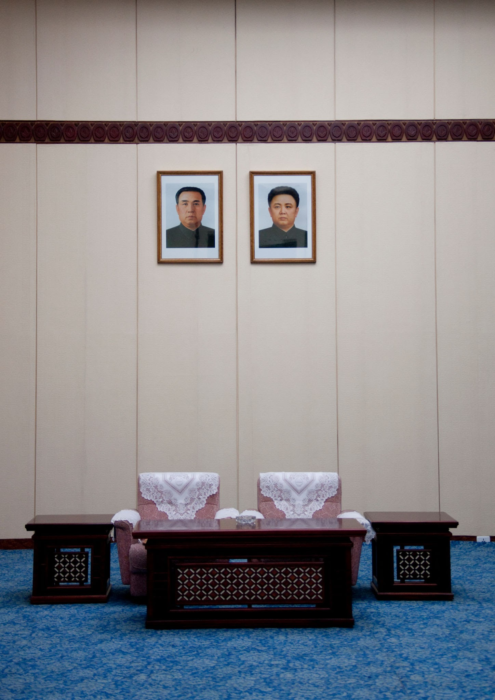
Portraits of the two former leaders hang in homes, offices, classrooms, and public buildings across the country. Keeping them clean is treated as a civic duty, and allowing them to gather dust was reportedly a punishable offence. I always remember that state media used to celebrate people who risked their lives to save the portraits from fires, and defector-sourced reporting described cases where treating the portraits carelessly drew an official investigation. In North Korea, the last thing you would want is to be officially investigated!
Bowing at the Statues

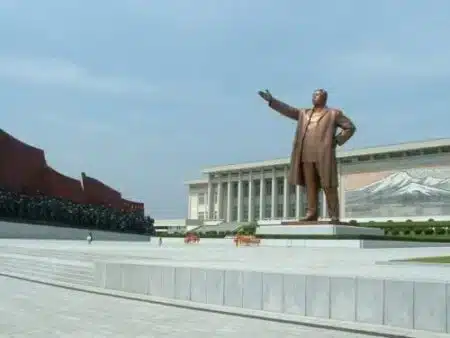
When visiting Pyongyang, tourists are often taken to the imposing bronze statues of Kim Il Sung and Kim Jong Il on Mansu Hill. During my time in Pyongyang, Kim Jong Il was still hale and hearty, so when we went to pay our respects it was to his late father. It was customary to lay flowers and here I am talking serious floral displays and then bowing to the statue. As well as entrenched diplomats, tour groups had to adhere to these customs, as guides meticulously supervised how photographs of the monuments were captured. Any disrespectful behavior, such as cropping the statues or pointing at them carelessly, was frowned upon.
The Weekly Self-Criticism Session
Many North Koreans belonged to a neighbourhood unit known as an inminban, which functioned as a combination of community group and local watch. Residents also took part in regular life-review sessions, where people were expected to reflect on their own shortcomings and those of their neighbours.
Holidays Built Around the Leaders
The national calendar was dominated by anniversaries tied to the ruling family. The birthday of Kim Il Sung on April 15 was known as the Day of the Sun, and that of Kim Jong Il on February 16 was another of the biggest holidays of the year. Both were marked with ceremonies, performances, and flower displays, including the famous kimilsungia and kimjongilia blooms named for the leaders.
Mass Performances and “Speed Battles”
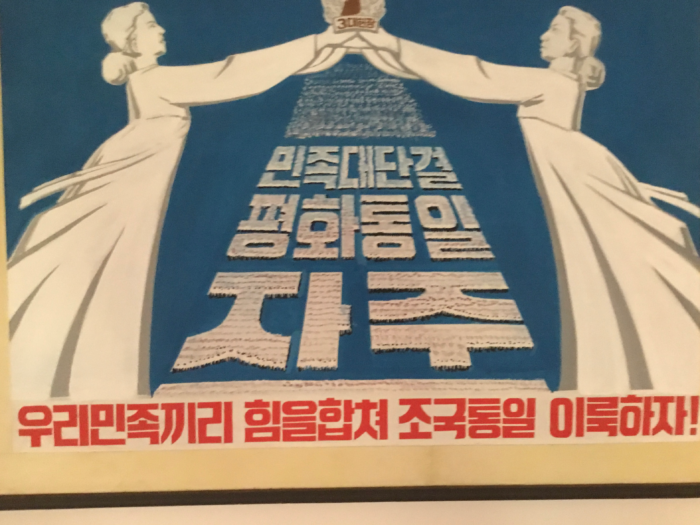
North Korea is known for huge synchronized performances, most famously the Arirang Mass Games in which tens of thousands of participants create giant moving images in a stadium.
I was fortunate enough to attend an Arirang performance and I can say it was one of the most breathtaking things I have ever seen. There were thousands of performers who carried out all kinds of perfectly choreographed displays on the field while tens of thousands in the audience carried out perfectly synchronised coloured card displays and mosaics.
In the months leading up to Arirang, driving around Pyongyang you would regularly see hundreds, sometimes thousands of people out practicing in the parks and open spaces. It is probably true to say, that North Korea is probably the only country that could pull off this sort of event on that scale.
One further related custom was the mass mobilisation campaign, often called a “speed battle,” in which workers and students were rallied to finish projects such as construction or harvests on an accelerated timetable, usually with slogans and music to keep morale up.
The Pyongyang Traffic Officers
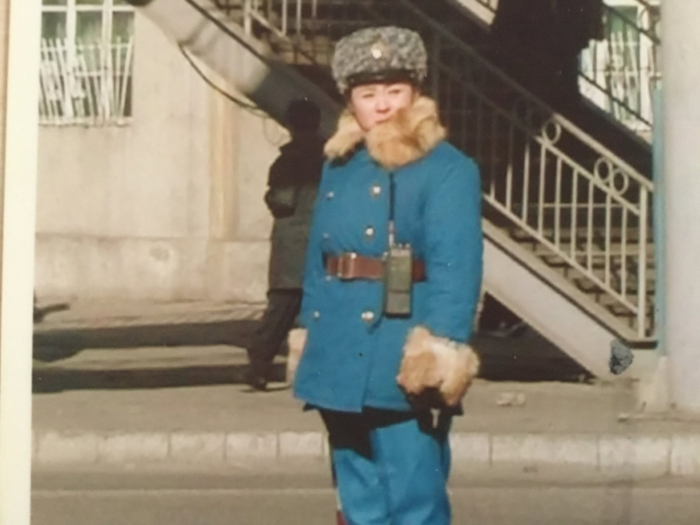
One of the capital’s most photographed sights was/is its female traffic officers, who directed the limited traffic with crisp, precisely choreographed hand signals, even at intersections where traffic lights exist. Becoming one was considered an honour, and the role has long been part of the city’s carefully presented image.
Strangely enough, given the North Korean’s phobia regarding foreigners taking photographs of anything not sanctioned by their tour guides or minders, taking photos of these young ladies was actually encouraged! Strange.
Needless to say, given the lack of traffic in the city, this was not a particularly tough gig for the ladies!
Flower Power!
One of the strangest things I came across was that every year during national holidays, massive flower shows were held at the Kimilsungia-Kimjongilia Exhibition Hall in Pyongyang. Government ministries, state organisations, and foreign embassies traditionally constructed elaborate floral displays featuring the two plants.
(Kimilsungia and Kimjongilia are hybrid flowers named after the first two leaders of North Korea, Kim Il Sung and his son Kim Jong Il. Both plants were heavily used as state symbols and focal points of political personality cults in North Korea, though neither is the official national flower – which is the Magnolia sieboldii).
The state attributed symbolic meanings to both flowers. Kimilsungia was said to represent loyalty and independence, while Kimjongilia symbolised wisdom, love, justice, and peace.
As of now, there is no official “Kimjongunia” flower cultivated for the current leader, Kim Jong Un but North Korea being North Korea watch this space.
Military Parades
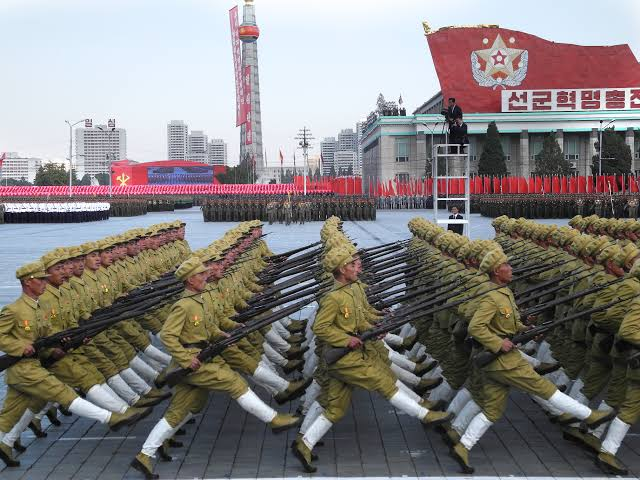
I know that strictly this is not a strange custom as virtually every country with a military holds such parades but North Korean military parades are amongst the largest, most tightly orchestrated mass spectacles in the world. Judging by the huge number of views the North Korean parades garner on YouTube they do seem to hold a certain fascination for people. However, one must remember that they also serve as a primary platform for state propaganda, domestic unity, and international power projection.
I was fortunate to be able to attend several of these parades during the course of my 3 years in the country and they were spectacular.
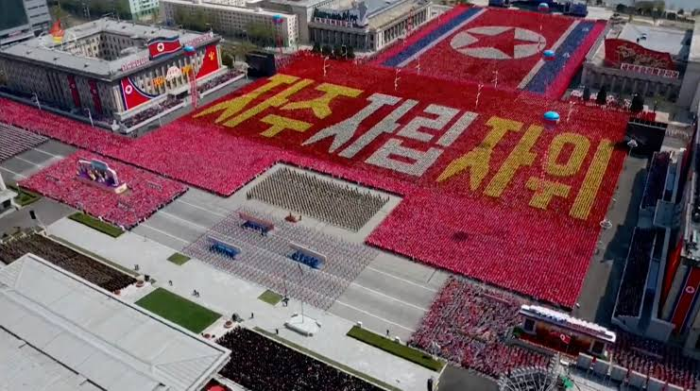
The parades were held in Kim Il Sung Square which was the main parade ground in Pyongyang. It was large enough (about 75,000 square meters) to host well over 100,000 people at once.
The most important area was the Stage and Viewing Platform where events were overseen by Kim Jong Il and top leadership from the elevated balcony of the Grand People’s Study House. It was always interesting to see who was in the reviewing party alongside Kim. Who was in? Who was out? Any Russians, Chinese or Iranians invited to review and why?
The parades would usually follow a well choreographed timetable. Up to 20,000 marching troops organised into rigid, highly synchronised blocks (often performing the characteristic high-stepping “goose-step”).
Then there were the civilians. Upward of 50,000 to 100,000 non-military participants (students, factory workers, state performers) filling the surrounding square. They held colour-coded placards, flags, or flowers to create giant human mosaics that spelled-out slogans visible from above.
Then came the hardware. Hundreds of heavy vehicles rolled through, main battle tanks, heavy artillery, armoured personnel carriers (APCs), and multi-launch rocket systems (MLRS). The climax of major parades featured massive multi-axle Transporter Erector Launchers (TELs) carrying medium-range missiles and Intercontinental Ballistic Missiles (ICBMs), such as the Hwasong-15, Hwasong-17, and Hwasong-18.
Finally, (weather permitting) formations of jet fighters and helicopters performed flypasts over the square, occasionally releasing flares or coloured smoke streams matching the state flag.
Note: I had the opportunity to work with the North Korean military in the recovery and “reburial” of the remains of an RAF pilot who was shot down and killed during the Korean War. What started off as a promising successful project, turned out in the end to be nothing short of a not very skilled deception as I detail in the two links below..
North Korea Military Work With British Diplomat
North Korea Military Plan Cruel Deception
Cabbages (Kimchi)

In North Korea, kimchi (often spelled kimchi or gimchi) was far more than a side dish—it was considered a national treasure, a vital source of winter nutrition, and a core pillar of cultural identity.
While both North and South Korea shared deep historical roots regarding fermented food, kimchi held a distinct operational and ideological importance in North Korea.
During North Korea’s cold climate with long, harsh winters, fresh produce was unavailable for almost half the year, therefore the North Korean government placed heavy ideological weight on kimchi as a symbol of Korean self-reliance (Juche) and cultural purity. The regime regularly hosted national kimchi contests and food festivals in Pyongyang, where home cooks and state restaurant chefs compete to display culinary skills and variations.
In urban centers like Pyongyang, state enterprises, factory communes and residential neighbourhood units (inminban) organised harvesting and bulk distribution of Napa cabbage and radishes every autumn. Modern apartment complexes often featured dedicated basement storage rooms .
Because the preparation of hundreds of pounds of cabbage required heavy labor, neighbours and extended families worked together in assembly lines—salting, washing, spicing, and packing jars into the ground or storage units.
Indeed our embassy was not exempt from the kimchi experience. Just prior to the harvest, we were ordered (not asked!) to release all our local staff for one full week in order that they could join their families in bringing in the harvest and then also carrying out the necessary preservation. Therefore for one week of the year, the embassy was in a virtual state of limbo until the staff came back.
A Word on Myths
These were some of the strange customs(to us foreigners) in North Korea highlighting the unique challenges faced by its citizens and the lengths they went to conform to societal expectations.
Because the country is so closed, myths spread easily. A popular example was the claim that citizens could only choose from a short list of government-approved haircuts. This idea circulated widely online, but it was poorly supported by solid evidence. It is still worth treating dramatic claims about North Korea with some skepticism and checking where they come from.
Moreover, understanding these strange customs in North Korea opens a window into the cultural norms and the daily lives of its people.
Final Thoughts
It is easy to treat these customs as curiosities, but they are best understood as part of a system that closely links daily life with loyalty to the state. Behind the pins and portraits are millions of ordinary people with families, humor, and aspirations, living with rules most of us will never face. Understanding the customs is a first step toward understanding the people.
Have you read or experienced something about North Korea that surprised you? Share it in the comments.
© Copyright 2026 James Warren
© All images unless stated otherwise are from the authors personal collection
