
Life for UK military personnel, civilian contractors and intelligence staff at Basra Palace between January 2005 and into 2006 marked a critical turning point.
During this period—encompassing Operation TELIC 5, 6, and 7 (under 4th Armoured, 12th Mechanised, and 7th Armoured Brigades)—the base transformed from a relatively stable administrative post into an increasingly targeted, fortified island in the heart of the city.
Deployment Preparation:
Late in 2004, I was selected for a posting to our Consulate in Basra as a Projects and Visits Officer and as such, prior to deployment, most of my time was taken up with briefings in London covering a range of topics. Obviously security was the main one, but there were others such as country profile, national/local politics (for those of us posted to Basra), religious, tribal and cultural briefings. Most of this being classroom based.
Upon completion of the above, I was then sent to undertake a 5 day Hostile Environment Training (HET) course carried out by an organisation called AKE, who were based near Hereford. (AKE was founded in 1991 by Andrew Kain, a former British Special Air Service (SAS) officer). AKE was credited with creating and popularising the concept of HET for civilians in the early 1990s. AKEGROUP.COM
It was very intensive 5 days for myself and my fellow attendees, most of whom were made up of the following:
Media Organizations: Standard training provider for war correspondents, journalists, sound engineers, and camera operators from major networks (e.g., BBC, CNN, ITN).
NGOs & Aid Workers: Humanitarian organizations sending staff into post-invasion Iraq, Afghanistan, and volatile areas in Africa.
Corporate / Contractors: Employees of engineering, oil and gas, and reconstruction firms entering high-risk zones.
The course covered a variety of scenarios and a great deal of emphasis was place on role playing and acting out various scenarios.
Trauma First Aid (HEFAT): Managing major arterial bleeding, blast injuries, and ballistic wounds using military-grade tourniquets and trauma kits.
Kidnap & Hostage Survival: How to react during a capture scenario, hostage psychological survival strategies, and behavior during active rescue attempts.
Explosive & Ordnance Awareness: Recognizing IEDs, landmines, unexploded ordnance, and tripwires.
Vehicular Threat Mitigation: Dealing with hostile checkpoints, carjackings, high-speed evasive driving, and incoming small-arms fire while in vehicles.
Practical Live Scenarios: Immersion exercises involving ex-military instructors role-playing as hostile combatants using pyrotechnics, blank rounds, and simulated ambushes to test stress response under pressure.
Finally, after completing all of the above and having undergone a full medical, I was more than ready to set off. Before doing so, I thought to myself that this HET course (at that time only recently signed up to by the FCO) would have been more than useful after my earlier experience of being ambushed and two of my colleagues shot during a vehicle ambush in Albania (I was fortunate in escaping with just a bruised forehead thanks to ducking at the right time!). https://mydiplomaticlife.com/wp-admin/post.php?post=961&action=edit
Arrival & First Impressions:
So, it was then a straight forward flight from Heathrow out to Kuwait City. After landing, I had been told, as part of my briefing back in London, to assemble with others at the coffee shop in the terminal where we would be met and transported to our hotel for the night. This we duly did.
We were quite a large group that assembled, a mixture of contractors, civilians and military all bound for Baghdad or Basra. Some were newbies like myself while others were returning from leave or courses back in the UK.
Eventually our local liaison turned up and directed us towards the coach which would take us to our hotel which turned out to be the Radisson SAS Hotel (now Radisson Blu). I later learned that this hotel was used as an operational base and transition hotel by various private security companies (PSCs), FCO/DFID and logistics contractors operating between Kuwait and Baghdad/Basra.
After spending a very comfortable night in the hotel, we were collected the next morning by our liaison and transported to a restricted area at the airport where an RAF Hercules aircraft was awaiting our arrival. Whilst being assembled before boarding, we were then briefed that those of us heading for Basra would first have to fly to Baghdad, land, get off the plane and wait before getting back on the plane and flying down to Basra. Seemed strange to overfly Basra and head to Baghdad first
I suppose there was a reason for this, what it was I couldn’t quite figure out, but it turned out that this was normal and standard operating procedure.
So, we boarded and the flight took off. After a relatively uneventful flight we experienced the dreaded tactical descent with flares a popping out the back into Baghdad. Definitely sphincter tightening time! After landing we de-planed and those of us who were going on to Basra assembled on the apron waiting for instructions to get back on the Hercules.
Suddenly the sound of explosions filled the air. We were all instructed to get down or take cover under various airport vehicles that were nearby. This of course we immediately did. Although the explosions sounded quite close by, we never saw any detonations and after a few minutes of sporadic shelling, it stopped. Welcome to Iraq, mortared on your first day!
I was certainly more than happy to get back on the plane, take off and head for Basra. But what was the story of Basra Palace in its current role?
Environment & Infrastructure
Basra Palace (officially the Multi-National Division (South-East) or MND(SE) City Operating Base) was an imposing compound built for Saddam Hussein along the Shatt al-Arab waterway.
The whole area was basically divided into two compounds within the Palace. The first was the civilian compound housing the Consulate and various contractor sites along with accommodation, dining facility, medical centre, gym, bar and towards the end of 2005, a newly constructed swimming pool.
On the military side, this area comprised virtually all of the original Palace buildings in various stages of habitation and repair. Here were housed military billets, cookhouse, various storage, repair and medical facilities.


In between the two compounds was a large cleared open area that was used exclusively for helicopter operations and as the security situation worsened and road travel was prohibited, became the only means of commuting outside of the Palace especially to Basra airport.
In effect, the helicopters became our only means of travel especially when going on leave when the earlier drive to Basra airport had been replaced by having to take a helicopter to the airport in order to catch a Hercules to take us down to Kuwait City for onward civilian flights to wherever we were going.


Accommodation: Life inside was defined by contrast—grand, marble-lined presidential reception halls (although not quite exactly up to Saddam standards courtesy of “military attention” during the conflict) combined with military field living. Most civilian personnel slept in hardened accommodation blocks or pre-fabricated structures (“corimecs”) stacked inside or around the grounds.
Hardening the Base: Throughout 2005, civil engineers worked continuously to build protective blast walls (HESCO bastions, sandbags, and concrete T-barriers) to shield living quarters and operational headquarters from incoming fire.
Living in this accommodation was pretty basic.
You had a small living/sleeping area and a bathroom with showers. There was also a small storage area.
It had a wall-mounted air condition unit (performed well subject to power of course!), a single bed with mattress, a lounge chair, a fridge, one DVD player plus connected TV monitor (no television channels available, so for DVD’s only). Pretty basic but totally functional.
It is worth noting that on the military side of the Palace compound were a number of small businesses owned and run by local Iraqis.
No doubt these merchants had been thoroughly security checked before they were allowed to operate in the compound (I hope they were!).
To cut a long story short, there was one individual we called Jabba The Hut who ran a small business that sold everything under the sun including DVD’s of a distinctly suspect origin.
Here you could buy bundles of 10 or 20 DVD,s together for a few dollars/euros. You paid your money and took your chances.
Some were watchable and some were absolutely dreadful. My favourite was Gone With The Wind in Chinese!
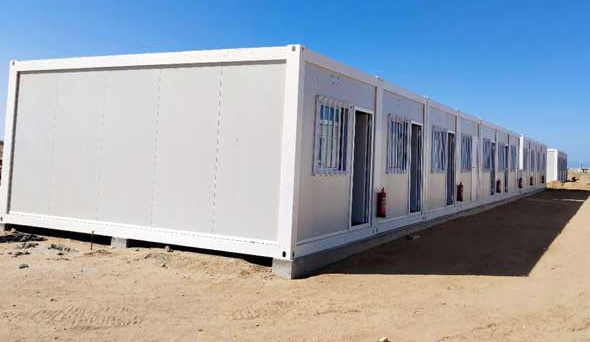


Utilities & Heat: Extreme climate dominated daily existence. Summer temperatures regularly exceeded 50°C (122°F). Power generators were under constant load, and air-conditioning failures in living quarters or command centres created punishing conditions. Night times during the summer months were the worst ,especially if there had been a power or generator outage. It was virtually impossible to have full nights sleep. Water was heavily rationed for washing, and bottled drinking water was consumed in vast quantities. Although we did have a shower unit in our accommodation pods, they worked infrequently (again depending on power) and the water dispensed from them ranged from a trickle to (if you were lucky) a modest stream.
Threat Environment & Daily Security
It is now worth noting a couple of events that hastened a virtual security breakdown. Between January 2005 and January 2006, the security environment deteriorated markedly. This came to a head with the emergence of the Jaish al-Mahdi (JAM) militia, led by cleric Muqtada al-Sadr, which significantly escalated conflict in Basra during September 2005.
While 2004 had seen significant clashes with Muqtada al-Sadr’s Mahdi Army, 2005 saw militia power consolidate politically and militarily across Basra. While militia infiltration of local government and security forces in southern Iraq had been steadily increasing throughout 2005, the major flashpoint occurred between September 18 and September 19, 2005:
September 18, 2005: British forces arrested senior local JAM leaders in Basra accused of orchestrating attacks. In response, JAM militiamen staged massive, violent demonstrations across the city, demanding their release.
September 19, 2005 (The Basra Prison Incident): Amid heightened tensions, two undercover British SAS operators were compromised and detained at a roadblock by Iraqi police officers heavily infiltrated by JAM and aligned Shia groups.The incident escalated rapidly. This event publicly exposed the extent to which JAM had taken over Basra’s police force and municipal infrastructure. This event shattered relations with local authorities and sharply accelerated hostility toward UK presence inside the city and conflict between British forces and JAM militias intensified into a sustained, low-level urban war that continued over the following years.
Key Details & Context
Control Risks Group (CRG): During the 2005–2006 period, CRG was the primary private security company contracted by the UK Foreign and Commonwealth Office (FCO) for the close protection of British diplomats, the Consul-General, diplomatic convoys and UK government civilians at the Consulate and when required, mobile protection around the Basra Palace complex. They were a very professional, focussed and valued group of guys. They were always good for bacon sandwiches, hence their popularity.
In addition to their tasks listed above, they also led us in regular training exercises, rehearsing possible conflict scenarios reinforcing what we had learnt on our AKE HET training.
In addition they taught us basic weapon handling as a last resort if we ever had to use one if our close protection operator was somehow incapacitated.
During the first few months of 2005, I was still able to travel around Basra relatively freely – with close protection in one of our armoured vehicles naturally. Part of my job description at the Consulate was a project entitled “Engaging with the Islamic world.” This entailed me going out and about, meeting local politicians and business people to assess where, if possible, opportunities and projects were viable to take forward that would be mutually beneficial to both HMG and the good people of Basra. I felt that during this period, I made some worthwhile progress in identifying projects, but as the months progressed and the security (especially local travel) worsened, progress came to a screeching halt.
Another duty I was tasked with was the conveying of diplomatic bags to our embassy in Kuwait City.
In the first few months of 2005, it was still possible to drive from Basra directly down to Kuwait City.
There was usually a couple of areas on the route that the CRG guys would flag up as potential hotspots whilst in transit and appropriate action would be taken by them to avoid these areas if their intelligence brief advised so.
After delivery of the diplomatic bags to the embassy and picking up any items to be taken back, we got to spend the night at the Radisson hotel in the city before heading back to Basra the next morning.
Tough gig, but someone had to do it!
But again, as the security situation worsened, it hit home really hard when we lost two of our CRG guys who were killed on the very last (as it turned out) Basra-Kuwait City run.
On July 30, 2005, two of our CRG security contractors were killed near Basra, when a roadside bomb (an Explosive Formed Penetrator, or EFP) detonated near our consulate diplomatic convoy they were guarding.
One of the personnel killed in this incident was Ken Hull, a former Royal Ulster Constabulary (RUC) officer working as a private security contractor for CRG.
Not long after this a DFID contractor was badly wounded along with his CRG close protection operative coming back to the Palace from a meeting in Basra city.
He was medically evacuated back to the UK.
These last two incidents put an end to all vehicular movements outside the Palace.
The early, relatively free movement was sadly over.
ArmorGroup: Another prominent British Private Military and Security Company (PMSC) operating in Basra at the time. ArmorGroup held contracts with the Foreign Office and the Department for International Development (DFID) in Basra, primarily providing site security, escort duties, and logistical support for police mentoring and reconstruction teams.
During my tour at the Palace, I spent a lot of time with the guys in ArmorGroup. ArmorGroup specifically employed former British and Indian Army Gurkhas as static guards, perimeter defense personnel, and convoy escorts due to their disciplined military background, weapons proficiency, and reputation.
I really bonded with these guys. They just so happened to be accommodated in a building adjacent to the Consulate and I would regularly bump in to them or make point of stopping and having a chat with them. One bonus for me was that I regularly had an invite to visit with them for a homemade curry night. Needless to say, this was an invitation I never declined.
British Military Role: While private security contractors provided close protection and static security for civilian personnel, the surrounding perimeter of the Basra Palace compound and overall regional security were supported by the British Armed Forces (Operation Telic). One thing I must add here. From my office window in the Consulate, I used to watch our military coming down the road towards the main entrance heading out for their patrols in Basra in their so called “Snatch Landrovers.”
In the first few months of 2005 when things were relatively quiet, these vehicles were deemed adequate for the guys to carry out their patrols. However, when the security situation worsened, the patrols came under increased heavier attack from the militias. Apart from having to deal with IED’s, snipers and RPG attacks, it was the introduction by the militias on a regular basis of shaped explosive charges that changed the whole picture. The Landrovers were not adequately protected against this latter threat and our guys paid a deadly price for this oversight.

Personnel Dynamic: Military vs. Civilian
The palace was a mixed ecosystem of military, diplomatic, and private contract staff. Instead of going into a long narrative as to the dynamics of this aforementioned ecosystem, I have from my notes and diary tried to tabulate Roles & Responsibilities and a general outline (which was always subject to change) Daily Routine/Conditions.
| Category | Roles & Responsibilities | Daily Routine / Conditions |
|---|---|---|
| UK Military Personnel | Infantry patrols (e.g., PWRR, Coldstream Guards, Staffordshire Regt), Royal Engineers, RLC logistics, intelligence, medical officers. | 12-to-18-hour shift cycles consisting of guard duty, urban foot/vehicle patrols, quick reaction forces (QRF), and base maintenance. |
| UK/International Civilians | Foreign & Commonwealth Office (FCO) diplomats, DFID reconstruction advisers, intelligence officers (MI6/GCHQ). | Housed in relatively secure areas of the base; restricted in ground movement with armed close-protection teams if outside the Palace. |
| Private Contractors | CRG, ArmourGroup, Aegis, KBR (catering, maintenance, power generation, armed security escorts). | Managed dining facilities (DFAC), vehicle maintenance, and internal logistics under strict security protocols. |
Work & Morale
The DFAC and Off Duty Hours: For the military, the Dining Facility (DFAC) was the main social hub. It offered standardized military catering, soft drinks, and sports broadcasts. Off-duty time was minimal, usually spent in improvised gyms, reading in bunks, or using limited satellite phone/internet terminals to contact families in the UK.
For us on the civilian side, I have to say that the quality and quantity of the food served up by KBR was superb. Although there were set meal times, you could always guarantee yourself a sandwich and a coffee whenever the urge grabbed you. The guys in the kitchen, even though they were busy prepping for service, were always amenable to our requests for a snack. They even managed to acquire a substantial quantity of haggis (from goodness knows where) when the Consulate managed to hold a Burns night!


On the civilian side, we were well catered for on the social side of things. We had a gym, a swimming pool and a fully stocked and staffed bar where we could relax, decompress and meet up with our visitors and military colleagues. The latter restricted by their one can rule!
We regularly held games days when we used to challenge the military and contractors to soccer, rugby or cricket matches. A popular competition turned out to be tug of war contests of all things.

From time to time we had barbecues which were always well attended. Again it was a good opportunity to mix with our military who were always grateful to escape the pressures of military life for a few hours.

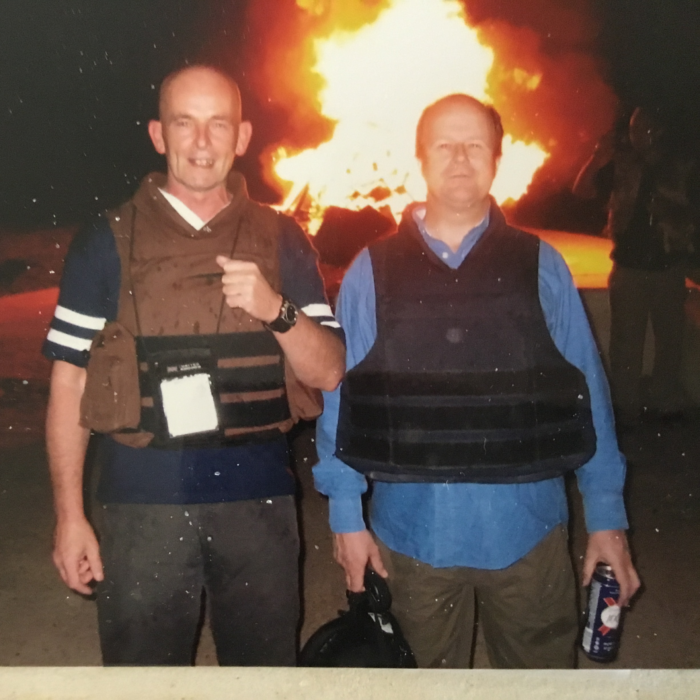
The “Two-Tier” Feel: Tensions occasionally existed between regular military troops on standard operational pay and private security contractors or civilian specialists earning significantly higher daily rates while sharing the same living spaces and rocket threats. Pay and bonuses were always being brought up and yes there was some resentment but it was mostly gentle ribbing or harumphing.
I for one thought that the military were given a rough deal. They took the most risk for the least pay.
The highest earners on the civilian side were not the diplomats but the DFID personnel.
They constituted the largest proportion of UK personnel in the Consulate and I was well aware of what they were earning.
One example was that of a British lady lawyer who was employed by DFID to assist the Iraqis in forming a new National Constitution.
This lady was on £1,000 per day for a 6 month contract (renewable).
She may very well have been an exception, but many of her DFID colleagues were not too far behind her.
Medical:
During 2005 and 2006, Basra Palace was under frequent indirect fire (mortars and rockets) and sniper threats from local insurgent groups. Consequently, civilian personnel were given strict medical clearance rules, and trauma response was closely integrated between civilian medical contractors on-site and UK military medical assets.
Frontier Medical / Private Contractors
Private medical contractors such as Frontier Medical provided in-country health surveillance, emergency/occupational care, and medical screenings for civilian personnel, UK officials, contractors, and consultants deployed to Basra Palace.
British Military Medical Support (RAMC / Field Units)
Because Basra Palace housed Multi-National Division (South-East) military contingents alongside civilian diplomatic staff, primary casualty care and trauma support were handled by the Royal Army Medical Corps (RAMC) embedded at the site.
Evacuation & Advanced Care: For serious injuries or stabilization, patients treated at the palace clinic were evacuated to military field hospitals—initially at Shaibah Logistics Base and later at the Contingency Operating Base (COB) at Basra Air Station.
End Of The Road:
Finally, it was with mixed feelings that my time in Basra Palace eventually came to an end. I would not miss the heat, the continuous security alerts, the mortars or rockets that had a nasty habit of heading our way and so many other things. However, I would miss working with our military and contractors, many of whom became friends and some I still keep in contact with.
So for me it was off to Kazakhstan to oversee the establishing of a new British Embassy in Astana. After Basra Palace….no problem!